...and I've distanced myself from the computer and from social networking for some weeks, now. I've never been very good at blogs, because of my infrequent use of the computer. The lockdowns were a different time, because I was easier than ever to end up before the computer. But these days...
Here are some of the reviews I put up for recent books completed:
1. First the dinosaur book in January, D. Cadbury, the Dinosaur Hunters (2000): "An interesting window onto the scientific scene of Victorian England, with scientists battling for recognition of their pioneering work with the new fields of geology and paleontology. In this narrative, we begin with the most poor and disadvantaged Mary Anning and Gideon Mantell, who nonetheless managed to make their names, Anning as a procurer of fossils and other curios and Mantell as a gifted physician with a consuming interest in geology. Anning died in misfortune, while Mantell was able to achieve the some of the highest accolades available to the scientist in his time; having sacrificed his family for it, he was never able quite to achieve sufficient recognition for the discover and description of several dinosaurs, especially iguanodon. Unfortunately, a more privileged Richard Owen arrived on the scene to monopolise the several fields of natural science, at a time when these were still generally theistic and even creationistic. The book ends with the fall of Owen after the triumph of Darwin, as the evolutionists successfully dethroned him and destroyed his legacy. As a study of human pride and selfishness, this book delivers well, and I am left with the impression that the best character in the narrative is the Anglican cleric and dean of Westminster, William Buckland. A good and mostly balanced read that I was able to hang on to until the end"
2. Then, the chess-parent book in January, F. Waitzkin, Searching for Bobby Fischer (1993): "A drawn-out description of the chess career of the author's son, inspired in part by the sheer genius of the 1972 World Champion, Bobby Fischer. The book deals with the fall-out from Fischer's winning the championship in 1972 and focuses especially on the plight of the (mostly male) chess players who gave their lives to the game and fell into various degrees of destitution. The book is based within a mostly Jewish atmosphere, with considerable sympathy for Jewish players, especially in the then Soviet Union, where chess was used as a measure of political competency and ideological superiority. The constant theme though is young Waitzkin's enormous talent and his steady progress in his primary school days, albeit with constant badgering from his father and hired chess teacher. It's impossible to not feel sorry for the child and frown at his father's carelessness. And it strikes me that, despite the fanboy praise for the great Fischer's chess prowess, the man himself is treated badly, a whole chapter given to a psychoanalysis of his behaviour. And, certainly, using the title of that chapter for the book as a whole and without Fischer's permission was a particularly selfish act."
3. And the cat book, M. H. Bonham, the Cat owner's problem solver (2008): "Nice, short summary of cat 'problems' - what you encounter when you have successfully confined a wild animal within your home and made her reliant upon you. The best thing about this book is that it's written about house cats and the author is clear that she recommends confining the beast for her own good. Every other book I've found talks about walk-in-and-out cats using cat-flaps."
4. The Jewish Catholic book, R. Schoeman, Salvation is from the Jews (2003): "An excellent book, to which I would assign the unusual five stars. I fully appreciate the author's position as a Catholic who retains his Jewish identity - this is basically the position of the Jewish Christians that we see in the New Testament, who included the Apostles of Christ and His mother as well. The book presents the subjects Messianism in the Jewish communities today, Messianic expectations and the expected entry of the Jews en masse into the communion of the Church in the latter days, prior to the Second Coming. Much of it speculation, but extremely interesting. There is a long description of the history of anti-semitism, particularly as developed by New-agers in Europe culminating in the Nazi terror, and then carried on by Islamists in modern Arab states. In all this, we find the great hope of the Jewish people and the great wound in their side that has been the Holocaust, the culmination of a wicked centuries-long campaign against them by what is undoubtedly a cruel Adversary using multiple agents. Again, an excellent book, and well recommended as a means to understand the Jewish mind."
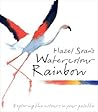 Hazel Soan's Watercolour Rainbow: Exploring the Colours in Your Palette by Hazel Soan


